


Our friend Nikunj Kothari at FPV Ventures incicively pointed out that VCs love to talk about certain categories in AI “have no moat”.
In our view, he nails it.
In the world of AI, where the underlying tech and models change so quickly, the ONLY moat for startups is execution.
In fact, the areas that venture investors and the general market dismissed as having no moat or could be built and commoditized quickly are also the ones enjoying the most significant revenue growth.
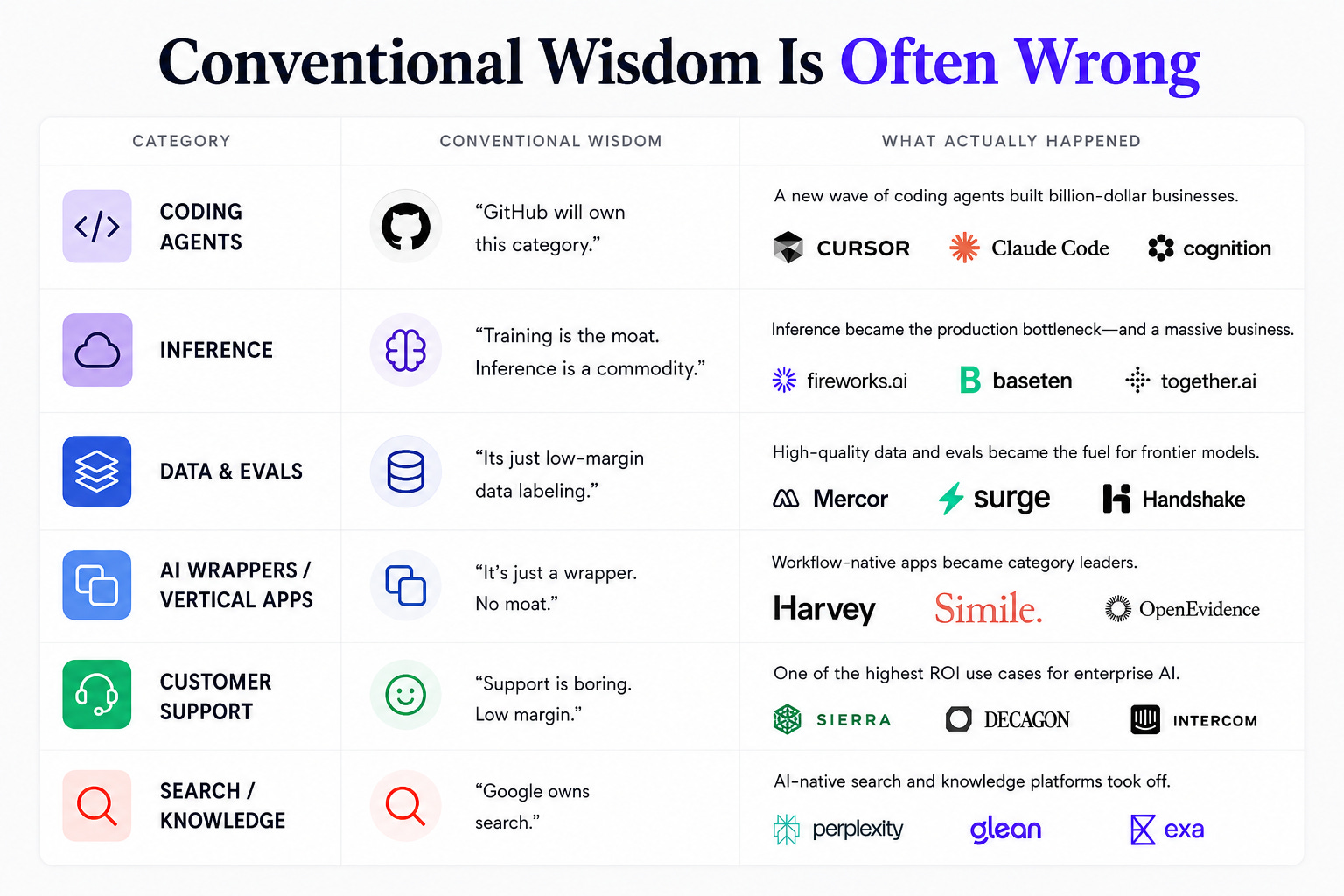
Coding Agents ($10B+ ARR) - “Github is going to win”
Back in 2023, Microsoft / GitHub Copilot was slated to be THE winner in AI coding. GitHub was the central place where millions of developers were pushing code and lived in. Through Microsoft’s partnership with OpenAI, they were using early versions of GPT to power Copilot and AI pair programming.
But that lead didn’t last long.
Repeated outages, executive turnover, and an inability to continue innovating led to GitHub falling from the AI coding leaderboard. In April, even Mitchell Hashimoto (founder of Hashicorp and among the first ~1000 users of GitHub) announced he was leaving the platform due to the diminished performance.

Meanwhile, a new crop of coding agents built AI-natively from the ground up began to emerge. Cursor (founded as Anysphere in 2022), Cognition (founded in 2023), and Claude Code (launched in 2025) all shot out of a cannon, winning users over with best-in-class performance, faster throughput, and a beautiful developer experience.
In just a few years, Cursor navigated a $60B sale to SpaceX, Cognition is rumored to be fundraising at a $40B valuation, and Claude Code is generating ~$3B ARR for Anthropic.
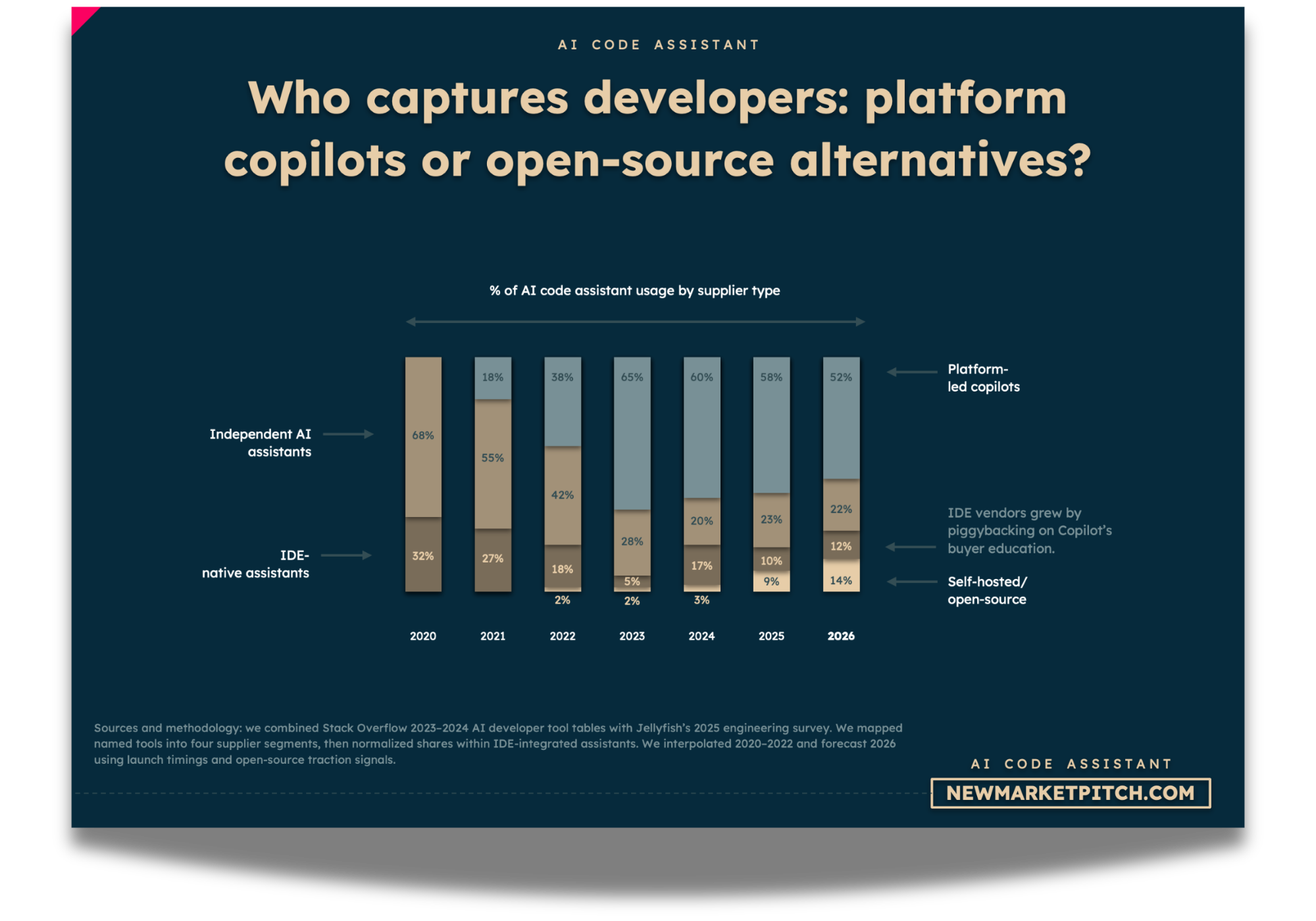
Inference ($5B+ ARR) - “It’s a commodity”
The standard line from as recently as 2026 was that selling inference was a “commodity” and a “race to the bottom”. Why? Because these companies didn’t own GPUs or compute themselves, but instead rented capacity and resold the compute to end customers. Training was expected to be the most interesting and important market, while inference would be swallowed by the hyperscalers.
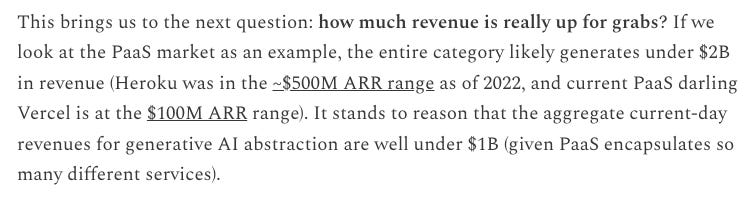
One VC blog post from 2024 pegged the TAM for “generative AI abstraction” as <$1B.
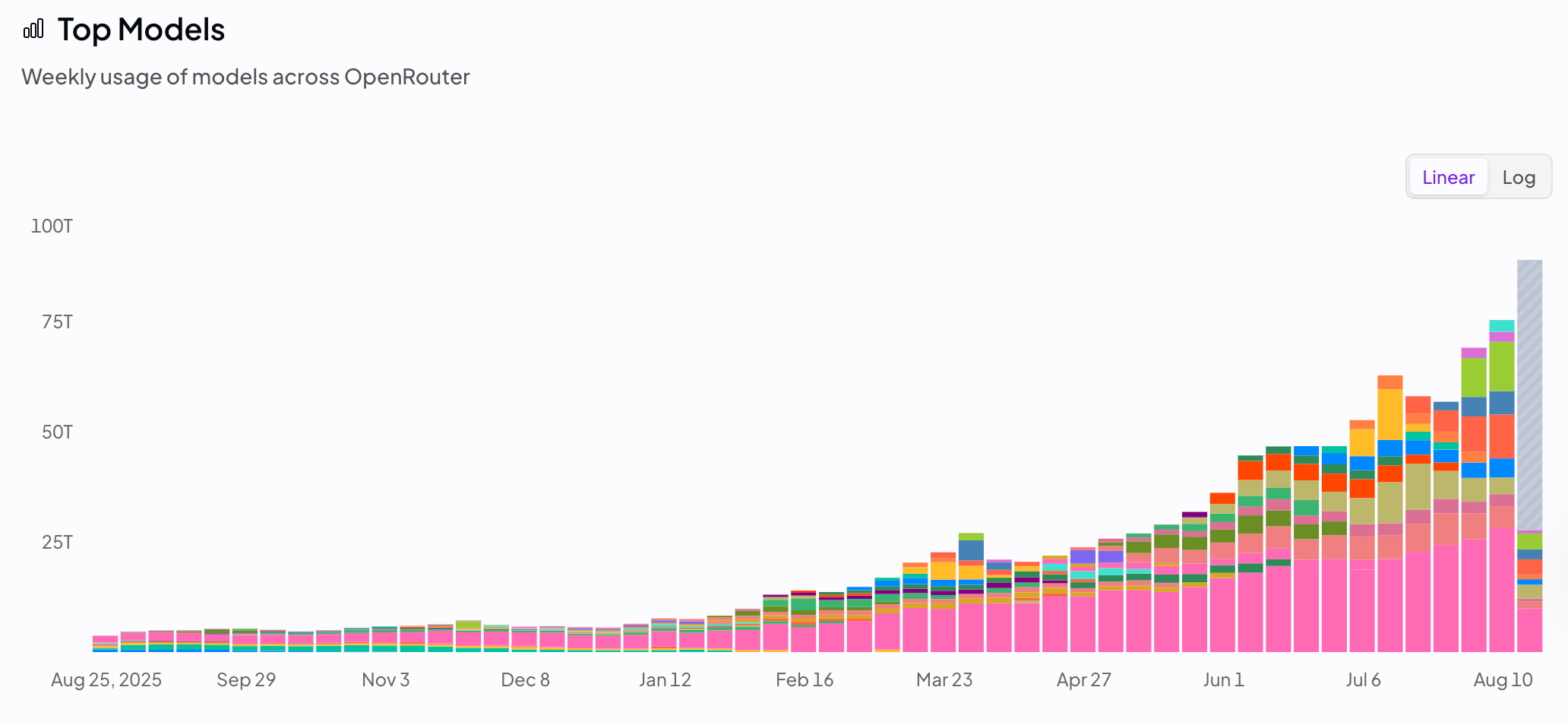
Fast forward to mid 2026, and inference providers are one of the largest revenue drivers in the AI market today:
Fireworks = $1B+ ARR
Together.ai = $1B+ ARR
Baseten = $800M+ ARR
Modal = $300M+ ARR
So what happened? We massively underestimated i) how large the TAM is for accessing intelligence; ii) the growth and use of open-source; and iii) building a well functioning, low-latency, high throughput inference engine is a lucrative business!
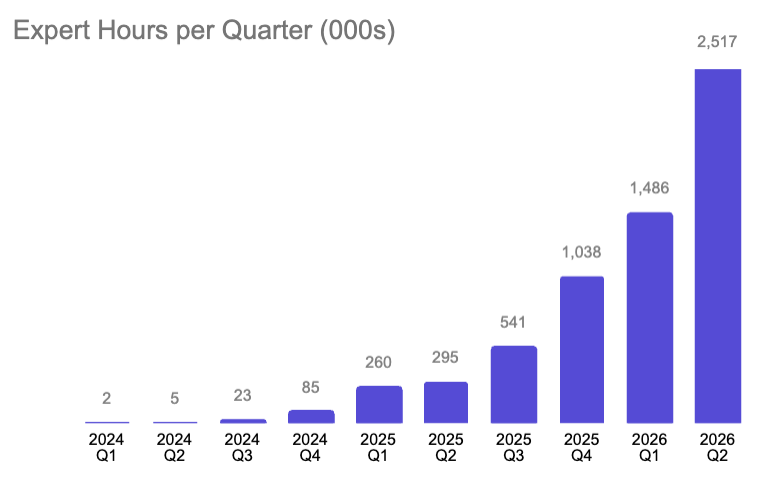
Data & Evals ($1B+ ARR) - “It’s just low-margin data labeling”
Early on, data labeling and evals were easy to dismiss as commodity, low-margin businesses: armies of contractors performing repetitive tasks, little proprietary technology, low switching costs, and constant pressure on price. The assumption was that labeling would either be automated away by better models or become an interchangeable service where the cheapest provider won.
Instead, as models have become more capable, the work has become more sophisticated. Frontier labs increasingly need expert-generated training data, complex coding and reasoning tasks, human feedback, and rigorous evals that can distinguish between already-capable models. What looked like outsourced labor has evolved into a critical part of the AI development loop—and the ability to reliably source expertise, maintain quality at scale, and rapidly adapt to what model builders need has turned “commodity” work into a large and strategically important market.
Now, you have multiple companies winning in the data and evals space:
And there are many others (Micro1, Turing, Outlier) plus a host of RL companies (Preference Model, Trajectory) in an adjacent category, not far behind!
Just Go Build
One lesson from the AI era is that it’s never been easier to start and scale a company, though its never been harder to win a category. The traditional “moats” that VCs like to talk about (technical, regulatory, distribution) are collapsing, and increasingly the only moat is execution: can you build an amazing product that customers love?
AI coding startups were thought to be too small to matter vs. GitHub. Inference clouds were expected to be a commodity. And data & eval companies were dismissed as low-margin labeling businesses.
Now, several of those companies have grown to tens of billions in valuation and generating billions of revenue.
So the answer?
Don’t listen to what VCs say, and just go build!