
AI Won’t Replace Innovation
Why frontier models will expand opportunity and where and how startups will win


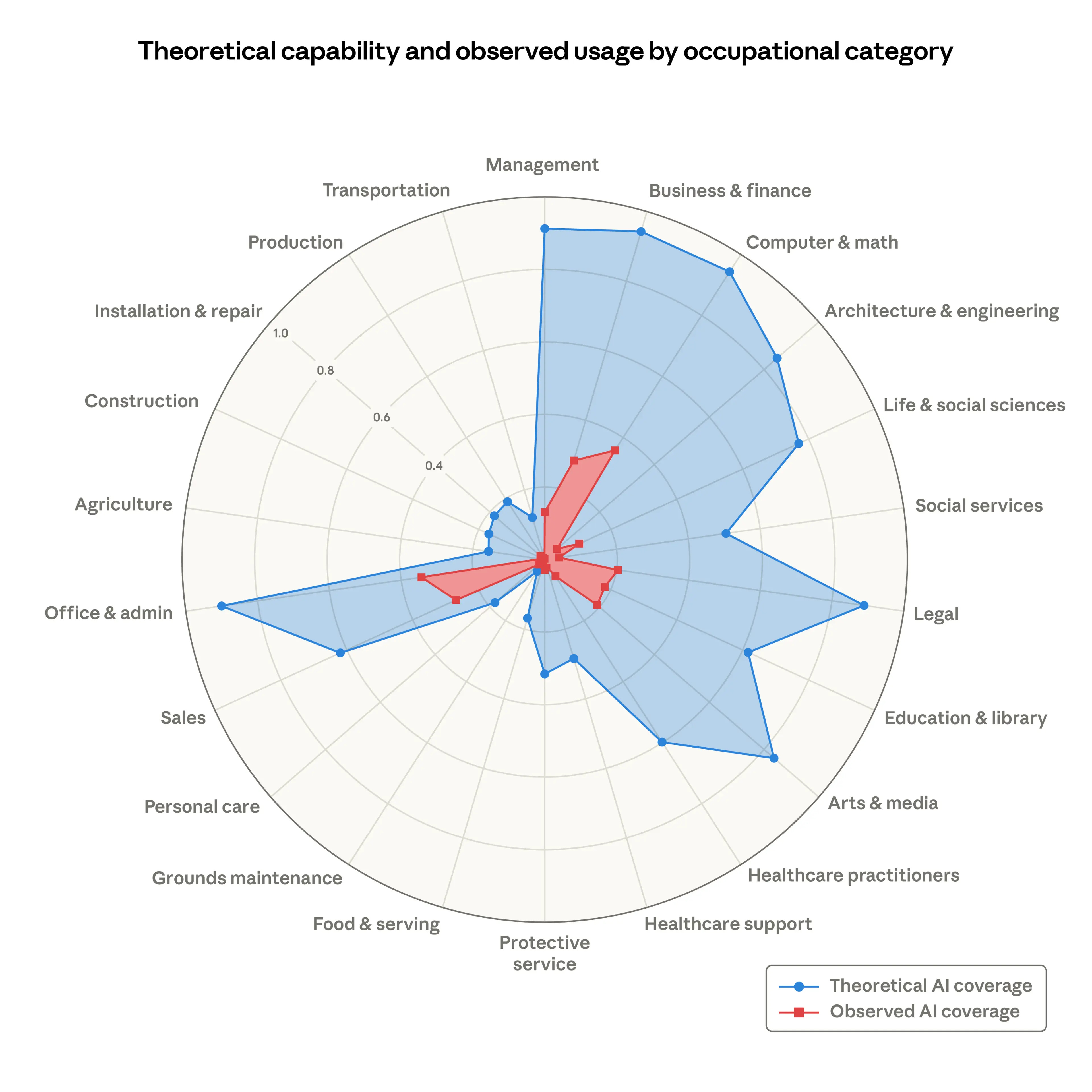
Over the past few months, a new narrative has taken hold. What began inside Silicon Valley has quickly spread into mainstream conversations about the future of work.
Frontier AI labs have been releasing increasingly capable models for years. These systems can reason, write code, conduct research, and automate complex workflows. But the latest generation of reasoning models from Anthropic and OpenAI, along with the buzz around OpenClaw (Jensen even claiming it to be the “most important software release, probably ever”), makes the pace of progress feel different. Capabilities that once seemed years away now look much closer to human-level intelligence.
Leaders in the field are starting to say the quiet part out loud. Anthropic CEO Dario Amodei has warned that AI could displace large portions of knowledge work. Headlines predict the disappearance of software engineering and entry-level legal and finance roles within the next decade. Companies like Amazon and Block are already citing “AI efficiencies” as they cut headcount. More than 33,000 tech layoffs were reported in the first two months of January alone.
This raises an unsettling question: if a small number of companies control the most powerful models, will they also control the workflows built on top of them? Will entire categories of jobs disappear? Will there be room for new companies to emerge?
It is a compelling narrative and one that understandably creates anxiety about the future. But history suggests something different. Our view is simple: AI will reshape work, but it will not eliminate opportunity, and the large labs will not own it all. Step-function technologies tend to expand the surface area for innovation, and AI will likely do the same. Let’s dig in!
Step-Function Technologies Expand Opportunity
Periods of rapid technological progress often feel destabilizing. When the printing press emerged in the 15th century, many feared the consequences of suddenly democratized knowledge. Yet as books became cheaper and more accessible, literacy surged and entirely new industries emerged — from publishing to journalism to modern education.
The same pattern repeated across other sectors. In manufacturing, Henry Ford’s introduction of the moving assembly line in 1913 dramatically increased productivity and helped create an entire ecosystem of automakers, suppliers, and infrastructure. In agriculture, the Green Revolution of the mid-20th century transformed food production through advances in fertilizers, irrigation, crop genetics, and mechanization. In the U.S., the share of people working in agriculture fell from roughly 40% in 1900 to under 2% today, even as food production soared.
Each shift initially appeared to displace labor, often threatening the only work people knew how to do. But over time, it expanded productivity, unlocked new capabilities, and created entirely new industries. AI appears to be following a similar trajectory.
How Startups Emerge and Win in the Age of Frontier Models
As frontier models continue to improve, intelligence itself will become more powerful and more widely accessible. But that doesn’t mean a handful of AI labs will capture all the value. Foundational technologies rarely work that way. When a new capability becomes abundant, innovation expands around it. Frontier models will likely become the infrastructure layer for intelligence, but the real-world applications of that intelligence remain vastly underdeveloped.
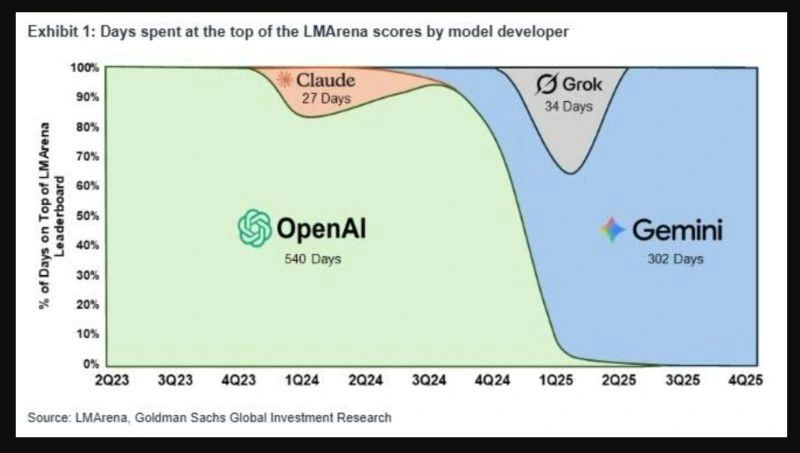
Entire sectors like education, financial services, and healthcare remain deeply underpenetrated by AI and are only beginning to scratch the surface. Billions of people still lack access to high-quality knowledge, services, and tools that intelligence could dramatically improve. While companies like Anthropic and OpenAI may build the engines, they cannot build every product powered by them and are still focused on competing within the model layer (see below just how competitive OpenAI, Anthropic, Grok and Google are even within the model layer).
The opportunity for startups lies in turning this raw intelligence into systems, workflows, and experiences that solve real problems.
Turning Intelligence Into Systems:
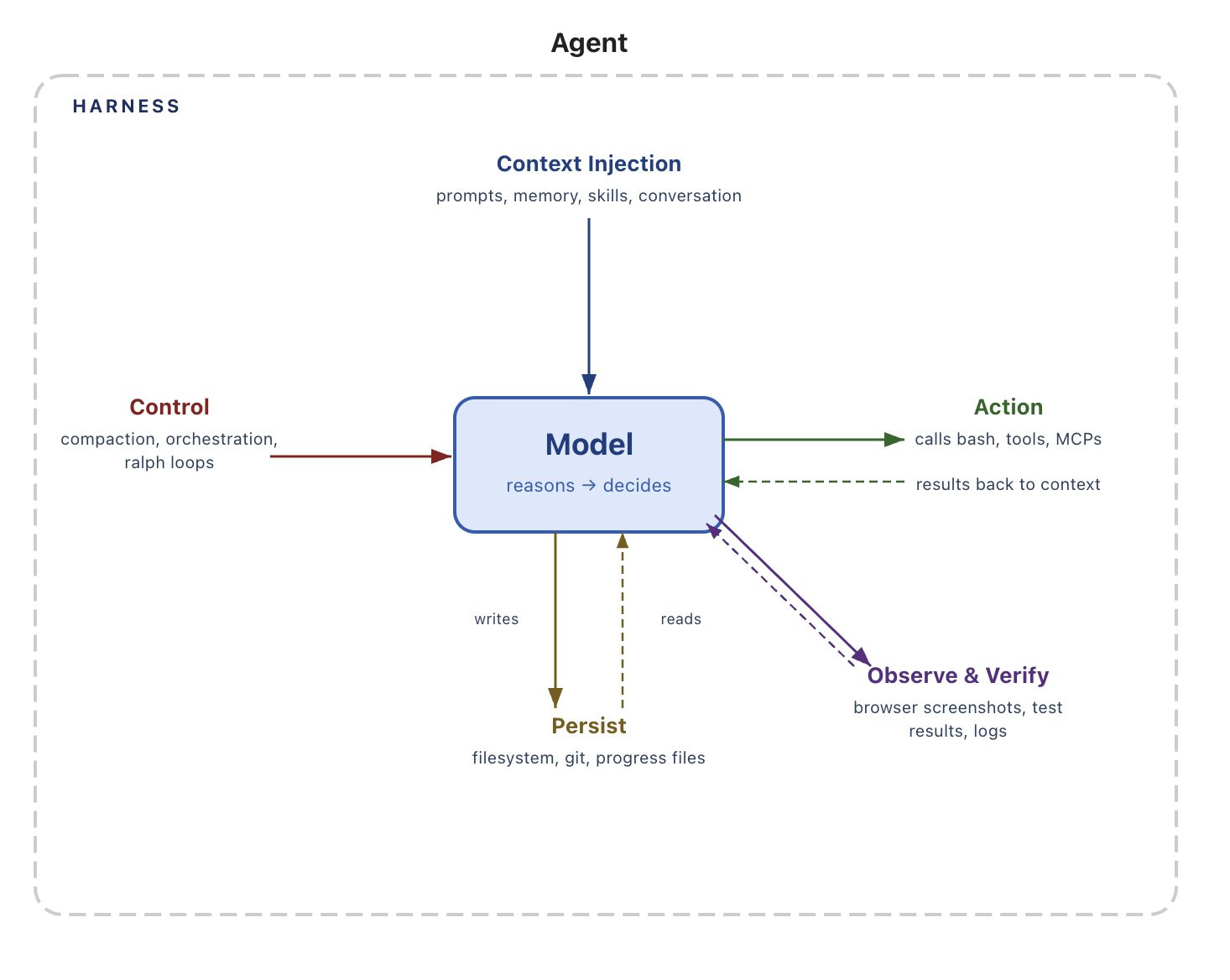
Models are extraordinary reasoning engines, but they are still fundamentally general purpose tools. Turning that raw capability into a reliable system for solving real problems requires architecture. Increasingly, people refer to this as the agent harness.
A harness is the system wrapped around the model that makes it useful. It routes tasks to the right model, orchestrates tools and sub-agents, retrieves context, and enforces guardrails and evaluation loops. In other words, it translates raw model capability into repeatable outcomes for a specific task.
Designing these systems is far from trivial. Developers must decide when to route tasks to different models, when to break work into parallel sub-agents, and when to rely on deterministic logic instead of model reasoning. Sub-agents execute delegated tasks in their own context so the parent agent does not have to absorb the full trajectory of each step. Simply handing everything to a model through natural language rarely produces reliable results.
Just as importantly, these systems must verify their own work. Strong AI applications increasingly rely on evaluation loops, retries, and structured checks to ensure outputs are correct before they are surfaced to users.
The best AI products combine models with structured systems. Deterministic code handles what must be precise. Models handle reasoning and ambiguity. Knowing where to draw that boundary is quickly becoming the core craft of building AI applications.
Building in a World Where Models Keep Improving:
Another defining feature of this moment is the pace of model progress. Models are becoming more capable, cheaper, and faster. What feels like a breakthrough today may become a baseline capability within a year. This creates a fundamental challenge: how do you build products that remain valuable as models rapidly improve?
In most cases, the answer is not to compete on intelligence itself, but to build around it. Owning workflows, integrations, evaluation systems, and data that compound over time. It’s unlikely that any single model will be best at every task. Different models will excel at different capabilities be that reasoning, content generation, structured outputs, math, image, and video. The opportunity for startups is to design systems that leverage multiple models, routing tasks to whichever performs them best and continuing to be model agnostic.
Having a Deep Understanding for Customer Needs and Taste:
One of the biggest mistakes in the AI era is assuming that better models automatically translate into better products. In practice, the gap between raw capability and real-world usefulness remains large.
Many users still struggle with what we might call the blank slate problem. Open most AI tools today and you’re presented with a blinking cursor and a powerful model or a chat box that says “how can I help you today”, but little guidance on what to do next. Great products solve this by embedding opinionated workflows and product taste.

Taste shows up in thoughtful UX, carefully chosen defaults, and guided experiences that reduce cognitive load for the user. Just as brand and design differentiate products in consumer markets, taste increasingly differentiates AI software. There is a reason why plain white t-shirts can exist for $5, $50, and $150, but be the exact same material, make and build. Consumer taste is incredibly important and until human behavior completely changes, it will continue to be.
Delivering the Last Mile for the Customer:
Even as models grow more powerful, the hardest part is rarely the intelligence itself —it’s the last mile. Turning raw model capability into something reliable in the real world requires deep integration with messy systems, edge cases, and real workflows.
Integrations must work, outputs must be reliable, and systems must behave predictably under real-world conditions. These are problems that require focus and iteration. Startups often have an advantage here. A company focused on solving one specific problem for one customer segment can go far deeper than a general platform trying to serve everyone.
Large AI platforms may become broad distribution engines for intelligence. But specialized companies will continue to emerge by getting the hard parts right in specific domains.

Changing The Consumer Behavior:
Even when the technology works, adoption is not guaranteed. Humans are strange creatures, and changing behavior often takes longer than improving the tech itself.
Last week, Vivek wrote about how Betty Crocker originally sold cake mix that required only adding water. The product failed because consumers felt guilty serving something that easy. The company eventually redesigned the mix to require adding an egg, giving people a sense of participation. Sales took off. AI products face a similar challenge today. Many users are still figuring out how to incorporate these tools into their daily work and decision making. The companies that succeed won’t just build powerful technology. They’ll design products that help people trust, adopt, and ultimately change how they work while educating them along the way.
What the Future Looks Like
History suggests the future of AI will look less like monopoly and more like an ecosystem. Frontier labs will build the intelligence infrastructure, but thousands of companies will emerge to turn that intelligence into products, workflows, and systems that solve real problems.
For founders and startups willing to deeply understand customers, build thoughtful systems, and focus relentlessly on specific workflows, the opportunity ahead may be larger than ever. And as a result, new jobs will also be created though we may not know what shape they will take. The race has just begun!

The ecosystem frame is interesting, and it provides a form of reassurance for anyone, for certain products that may be reductively perceived as a "LLM wrapper."
There is a tension that came up as I was reading, and I wanted to ask, since you note that frontier models must continue to complete in the model layer, and cannot as you say, build every product powered by them.
What would your response be to the current events where it seems like every week Claude is pumping out new features that aren't necessarily improvements to the model itself but compete in the application layer?
For example, their Microsoft add-ins, which may have been an idea for a startup that wanted to leverage Claude to create their own product. Do you expect this to taper off eventually and for the future to play out like your article suggests? Is this the exception and not the norm?